-
×
 TitanRadiology Core Radiology Qbank 2021 (Exam-mode Qbank)
2 ×
TitanRadiology Core Radiology Qbank 2021 (Exam-mode Qbank)
2 ×25.00 $21.25 $ -
×
Comprehensive Review of Pediatrics 2014 (CME Videos)
1 ×10.00 $8.50 $ -
×
 Seeds Scientific Research & Performance Mastermind 10 Post-Viral Fatigue 2023
1 ×
Seeds Scientific Research & Performance Mastermind 10 Post-Viral Fatigue 2023
1 ×50.00 $42.50 $ -
×
 Child & Adolescent Psychiatry Board Review Course 2017 (BEATTHEBOARDS) (Videos + PDFs)
1 ×
Child & Adolescent Psychiatry Board Review Course 2017 (BEATTHEBOARDS) (Videos + PDFs)
1 ×10.00 $8.50 $ -
×
 Radiation Oncology – A Comprehensive Review 2018 (CME Videos)
1 ×
Radiation Oncology – A Comprehensive Review 2018 (CME Videos)
1 ×10.00 $8.50 $ -
×
 Radiation Oncology Biology & Physics Online Review (CME VIDEOS)
1 ×
Radiation Oncology Biology & Physics Online Review (CME VIDEOS)
1 ×25.00 $21.25 $ -
×
 Harvard Updates in General Internal Medicine for Specialists 2022
1 ×
Harvard Updates in General Internal Medicine for Specialists 2022
1 ×10.00 $8.50 $ -
×
 UWorld USMLE Step 2 QBank Dec 2025 – Offline
1 ×
UWorld USMLE Step 2 QBank Dec 2025 – Offline
1 ×25.00 $21.25 $ -
×
 USCAP Challenges in Hematopathology 2022
1 ×
USCAP Challenges in Hematopathology 2022
1 ×75.00 $63.75 $ -
×
 ACP Internal Medicine Meeting Pre-Course (2019)
1 ×
ACP Internal Medicine Meeting Pre-Course (2019)
1 ×30.00 $25.50 $ -
×
 Classic Lectures in Pathology What You Need to Know Breast Pathology
1 ×
Classic Lectures in Pathology What You Need to Know Breast Pathology
1 ×35.00 $29.75 $ -
×
 2020 Updates in Thoracic Imaging Highlighting Lung Screening, Interstitial Lung Disease, and Cardiac Imaging
1 ×
2020 Updates in Thoracic Imaging Highlighting Lung Screening, Interstitial Lung Disease, and Cardiac Imaging
1 ×35.00 $29.75 $
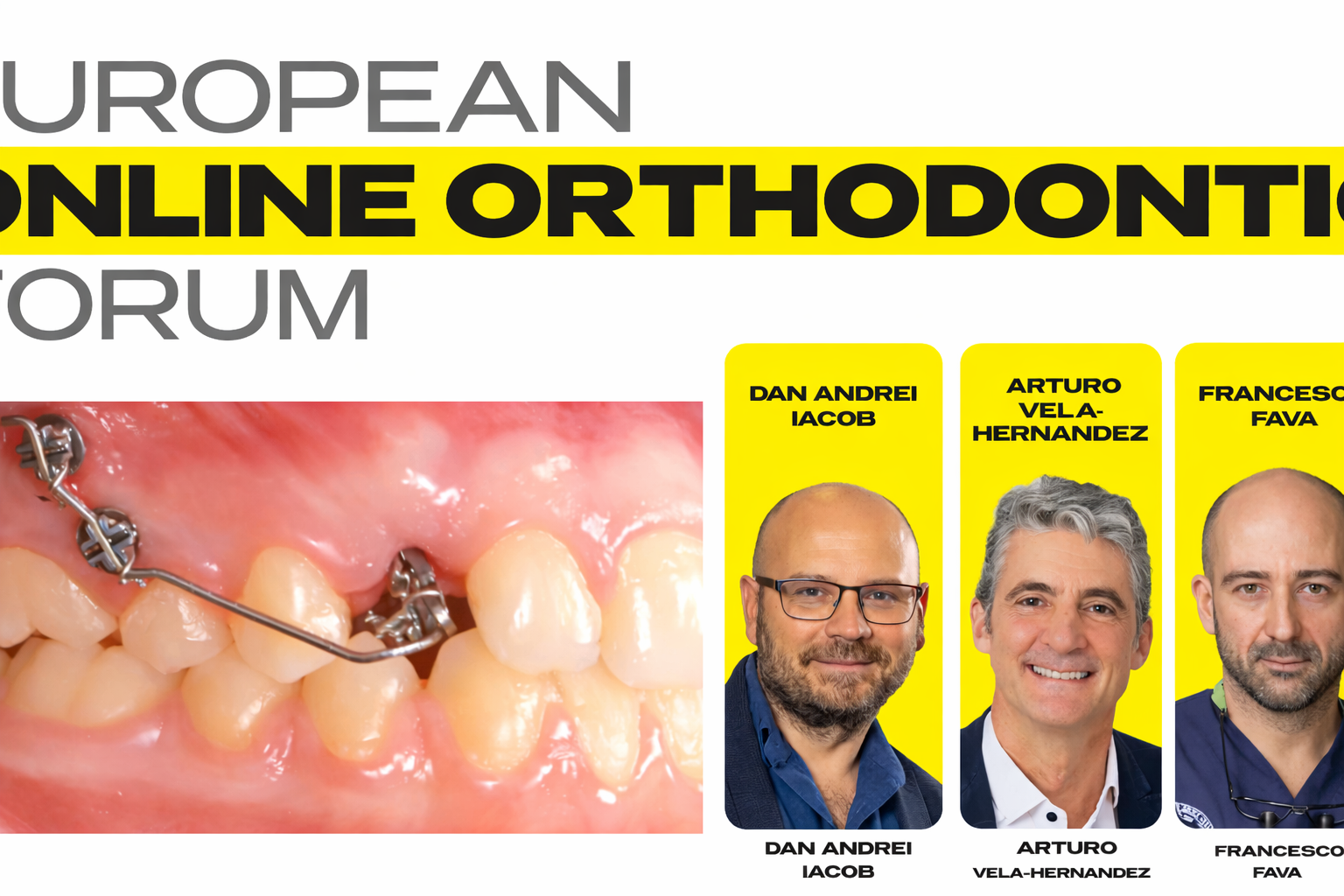
OHIS European Online Orthodontic Forum. Advanced Protocols and Innovative Orthodontic Practices
40.00 $
This Product is shared via google drive download link, So please share your correct Gmail id while placing the order .Please note that there are no CME points or certificate associated with this course
Samples for Courses Can be found here : Free Samples Here!
Description
Advanced protocols and innovative practices in orthodontics are featured in the online version of the European Orthodontic Forum, where high treatment standards meet high expertise!
During the course, you will explore the most relevant topics in modern orthodontics:
– Biomechanics of orthodontic treatment
– Aligner therapy for open bite
– Aligners + skeletal anchorage
– Orthodontic treatment of patients with TMD
– Use of cantilevers for the treatment of canine impaction.
You will enjoy lectures from outstanding specialists who share only clinical, experience-based content — practical insights, real cases, and evidence-based approaches that can be directly applied in your daily orthodontic practice.
Lesson 1.Principles and Biomechanics of Open Bite Treatment with Aligners
– Advantages of treating open bites with aligners as opposed to conventional fixed appliances
– Misconceptions in the planning of open bite treatment with aligners
– Basic biomechanical resources
– The different planning strategies based on scientific evidence
– Evidence-based biomechanical concepts
– Typical errors in open bite diagnosis and treatment planning.
Recommended for: Orthodontists, General dentists.
Lesson 2.Advanced Planning and Treatment Protocols for Open Bite with Aligners and TADs
– Evidence-driven approaches to open bite correction
– Sequencing of tooth movements for optimal results
– How to handle auxiliary resources in severe cases
– Treatment protocols for complex cases with aligners and skeletal anchorage devices
– Analysis of clinical cases.
Recommended for: Orthodontists, General dentists.
Lesson 3.Orthodontic Treatment of Patients with TMD
– Principles of orthodontic treatment for patients with TMJ dysfunctions
– Analysis of the TMJ and biomechanical movement of the lower jaw
– Introduction to splint therapy in the orthodontic context
– Biomechanics of orthodontic treatment for patients with TMJ dysfunctions.
Recommended for: Orthodontists, General dentists.
Lesson 4.Splint Therapy and Clinical Applications for Orthodontic Patients
– When and why splint therapy is indicated
– Integration with orthodontic treatment
– Types of splints:
– Occlusal splints: stabilization, repositioning, and functional
– Selection criteria based on patient presentation.
– Clinical application:
– Combining splint therapy with orthodontic biomechanics
– Monitoring patient progress and adjusting treatment.
Recommended for: Orthodontists, General dentists.
Lesson 5.Cantilevers: Key to Success in Canine Impaction Management
– Overview of impacted canines and their clinical challenges
– The clinical advantages and the potential of cantilevers
– Why are cantilevers for impacted canines more efficient and effective than elastic tractions.
Recommended for: Orthodontists, General dentists.
Lesson 6.Clinical Protocols and Case Applications of Cantilevers
– When to use cantilevers in clinical practice
– Basic principles of cantilever mechanics
– Step-by-step bending techniques for clinical use
– Avoiding common biomechanical errors
– Analysis of clinical cases.
Recommended for: Orthodontists, General dentists.
Related products