
Harvard Emergency Medicine Updates & Current Practices 2026 (Videos + PDFs)
140.00 $
The Harvard Emergency Medicine Updates & Current Practices 2026 program provides a comprehensive, high-yield review of contemporary emergency medicine. The curriculum covers critical advancements across a wide array of topics, including point-of-care ultrasound (POCUS), advanced airway management, resuscitation guidelines, stroke protocols, and the integration of artificial intelligence and telemedicine to optimize emergency department workflows and patient care.
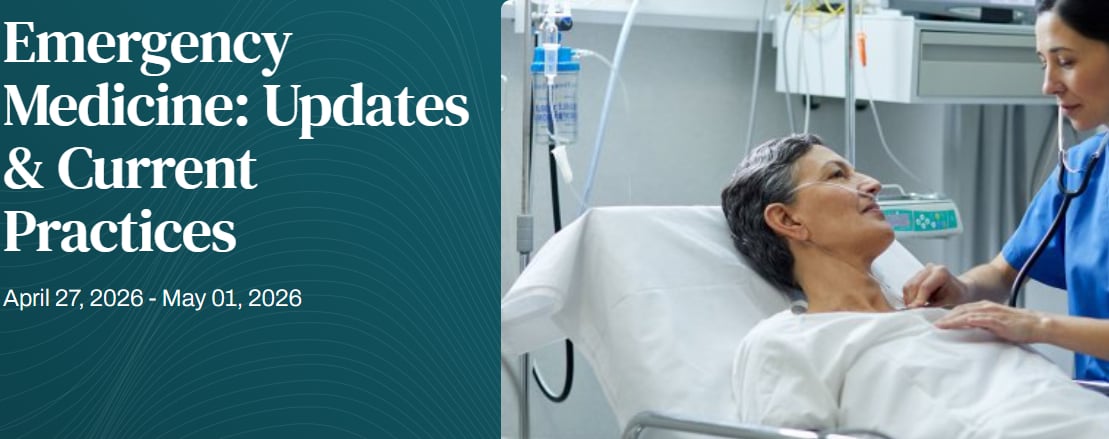
Course Dates: April 27 – May 01, 2026
Gain practical, immediately applicable strategies across critical care, trauma, pediatrics, geriatrics, health equity, and innovation through interactive lectures, case-based discussions, and recorded sessions for flexible learning.
Join us for a dynamic one-week live-stream virtual postgraduate course hosted by the Massachusetts General Hospital (MGH) Department of Emergency Medicine. Designed for emergency physicians, specialty physicians, primary care doctors, physician assistants, nurse practitioners, nurses, and EMTs, this live-streaming course offers a unique opportunity to learn from leading experts in the field. This five-day course will cover a vast array of topics that may include:
Acute Compartment Syndrome
Acute Ischemic Stroke Updates
Airway Advances
ARDS
Approach to the Critically Ill Trauma Patient
Atypical Presentations of Disease in Older Adults
Burns
Cardiac Arrest
Clinical Informatics in Emergency Medicine
Current Practice in Newborn Fever
Critical Care Double Feature: Push-Dose Pressors and Phenobarbital for Severe Alcohol Withdrawal
ED Care of the Psychiatric Patient
EMTALA, Medical Screening Exams, and Challenging Patients: Considerations for Your Next Shift
Environmental Impacts of Healthcare and What Emergency Physicians Can Do
EKG’s
Frailty
Geriatric Falls
Improving ED Patient Experience
Innovating in Emergency Medicine: Challenges and Opportunities
Medical Jargon
Mild Head Trauma
Operationalizing Health Equity in the ED
Pediatrics – Bronchiolitis: What’s Known and What’s New
Personalized Management in Septic Shock
POCUS – (Cardiac, Lung, eFAST, Pediatrics, and Procedures)
Postpartum Hemorrhage
Predictive Model Evaluation
Pulmonary Embolism
Scrotal Pain
Sepsis Updates
Social Determinants of Health: Why Health Equity is the Business of Emergency Medicine
STI’s
Supporting Humanitarian Disasters with Digital Health
Update on Ventricular Fibrillation Cardiac Arrest
Vasopressors and Shock Pearls
What’s New in PEM Literature
Wilderness Medicine / High Altitude Illness
This interactive course will include didactic presentations followed by Q&A, review of cases, problem solving and other engaging formats via remote learning. Learners will have many opportunities to develop new strategies they can incorporate into their practice setting. All lectures will be recorded and available for asynchronous viewing in case of time-zone/schedule conflicts.
Learning Objectives
Identify underlying tachydysrhythmias.
Identify most up-to-date therapeutics for cardiac arrest.
Integrate the latest evidence-based practice strategies in treating patients with acute hemorrhagic stroke.
Utilize latest evidence based algorithms and strategies in management of PE and DVT.
Related products

Critical Care / Emergency Medicine
The Brigham Board Review in Infectious Diseases Brigham and Women’s Hospital Board Review


Critical Care / Emergency Medicine